Cacio e Pepe (Creamy Pasta Without Cream)
Make cacio e pepe with spaghetti, Pecorino Romano, black pepper, and starchy pasta water. A step-by-step, no-cream pasta dinner with clump-prevention tips.
- Prep time
- 10 min
- Cook time
- 20 min
- Total time
- 30 min
- Servings
- 4
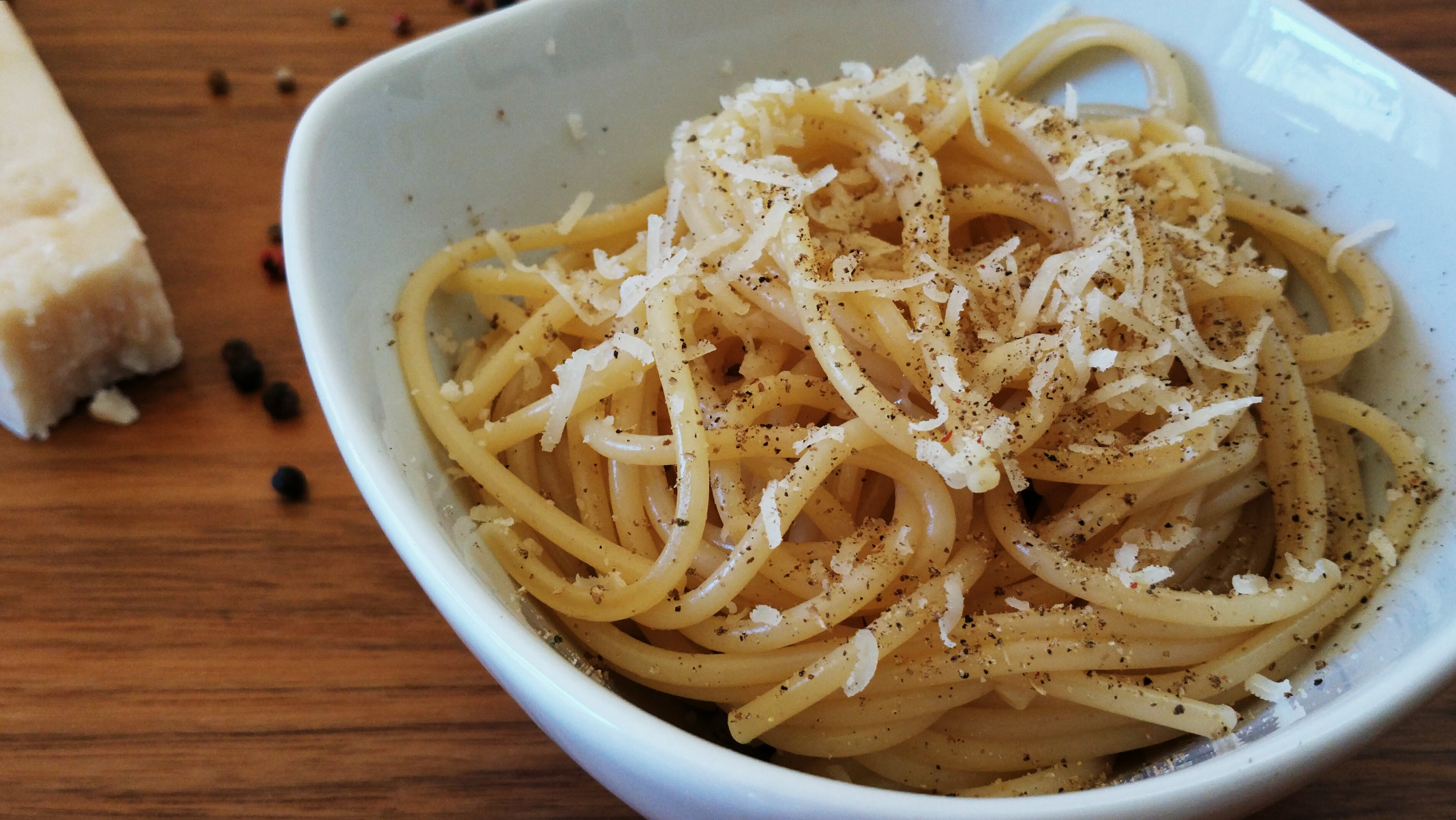
Cacio e pepe is a Roman pasta dish built around cheese and pepper, not a cream sauce. This home-kitchen version uses a bowl to finish the pasta away from direct heat, giving you more control when the finely grated cheese meets the starchy water. The ingredient list is short, but the order matters: grate first, reserve the water, then toss while the pasta is hot and the pan is no longer sizzling. Plan to eat as soon as the sauce is glossy. The listed time includes bringing the water to a boil; a large pot or slow stove may take longer.
How to keep cacio e pepe creamy without adding cream
The sauce comes together when finely grated cheese, starchy cooking water, and hot pasta are tossed into a loose coating. A block of Pecorino Romano and a fine grater give you control over particle size. Measure by weight if possible: 1 1/2 fluffy cups is not the same as a tightly compressed cup of coarse shreds. Have the cheese in a bowl before the spaghetti finishes so you do not leave drained pasta waiting on the counter.
The finishing bowl is deliberately off the stove. A skillet that was just boiling can still be too hot for the cheese, even after the burner is switched off. Let the small portion of cooking water stop bubbling before making the paste, then use the heat held in the pasta to finish the sauce. Add reserved water in small spoonfuls; it is easier to loosen a coating gradually than to remove a puddle. This is a technique-focused home adaptation, not a claim of independently tested kitchen results.
Troubleshooting this recipe
Why did my cacio e pepe turn stringy or clumpy?
The cheese may have met too much heat, been grated too coarsely, or lacked enough starchy water. Move off the heat and toss with a small spoonful of warm reserved water. Do not keep boiling a clumped cheese sauce in the hope it will become smooth.
Can I make the sauce ahead of time?
This sauce is best mixed directly with freshly cooked pasta. You can grate the cheese and measure the pepper ahead, then refrigerate the cheese until needed. The finished sauce thickens as it stands, so plan to serve immediately.
Is this the same as Alfredo or carbonara?
No. This recipe has no cream, butter, eggs, or cured pork. The site's Alfredo and carbonara recipes use different ingredients and methods. Follow the version you actually intend to cook rather than combining their steps.
Further context: Roman dish and cheese-water technique: Turismo Roma. The method above is our home-style adaptation.
Cacio e Pepe (Creamy Pasta Without Cream)
Serves 4 · Prep 10 min · Cook 20 min · Total 30 min
Ingredients
Step-by-step instructions
- Finely grate the Pecorino into a large heatproof mixing bowl. Avoid long shreds or a coarse grater: small, fluffy particles blend more readily. Set out tongs and four serving bowls before cooking.
- Bring the measured water to a boil in a wide pot. Add the salt and spaghetti, stirring well. Cook according to the package until al dente, usually 9 to 12 minutes, stirring occasionally so the strands do not stick.
- While the pasta cooks, toast the pepper in a dry skillet over medium-low heat for 30 to 60 seconds, just until fragrant. Remove from the burner; do not let it smoke. Add it to the bowl of cheese.
- Near the end of cooking, scoop out 2 cups (480 ml) of starchy pasta water. Let 1/3 cup (80 ml) of it cool in a small cup for about 1 minute, until hot but no longer bubbling. Stir it gradually into the cheese to make a thick paste. Reserve the remaining water.
- Transfer the drained hot spaghetti into the cheese bowl, off the stove. Add another 1/4 cup (60 ml) of reserved water and toss vigorously with tongs for 30 to 60 seconds. Add more water 1 tablespoon (15 ml) at a time until a glossy sauce coats the strands without a watery pool.
- Taste before adding salt because Pecorino is salty. Divide among four bowls and serve immediately. If the sauce starts tightening while plating, toss in one more spoonful of reserved water; do not put the cheese bowl over a direct flame.
A few kitchen notes
- Grate from a block for the smoothest sauce; some packaged grated cheeses contain anti-caking ingredients that change melting.
- Do not pour actively boiling water onto the cheese or simmer the finished cheese sauce. Too much heat encourages clumps.
- If a few clumps form, move the bowl away from heat and toss with a little warm reserved water. Large rubbery clumps may not fully dissolve; more heat usually makes them worse.
Ingredient substitutions
- Use the same weight of linguine, following its package timing. Thicker shapes may need more cooking water.
- For a milder variation, replace up to half the Pecorino by weight with finely grated Parmesan. This changes the flavor. Traditional animal-rennet cheeses are not necessarily vegetarian; check labels.
Storage & reheating
Best freshly tossed. Refrigerate within 2 hours (1 hour above 90°F/32°C) and use within 3 days. Reheat with water to 165°F (74°C); sauce texture will change.
What to serve with it
Serve with our tomato basil bruschetta or a simple green salad. Sides are not included in the recipe time.
Comments & kitchen questions
Have a question, a useful substitution, or a result to share? Your feedback helps us make this recipe clearer and more useful.
Questions from the kitchen
Can I make Cacio e Pepe (Creamy Pasta Without Cream) ahead?
Best freshly tossed. Refrigerate within 2 hours (1 hour above 90°F/32°C) and use within 3 days. Reheat with water to 165°F (74°C); sauce texture will change.
What if I can’t find an ingredient?
Use the same weight of linguine, following its package timing. Thicker shapes may need more cooking water. For a milder variation, replace up to half the Pecorino by weight with finely grated Parmesan. This changes the flavor. Traditional animal-rennet cheeses are not necessarily vegetarian; check labels.
You might also like.
 Italy
Easy Pasta al Pomodoro
Make easy pasta al pomodoro with canned tomatoes, garlic, olive oil, and fresh basil for a bright Italian dinner that comes together on a busy weeknight.
 Italy
Spaghetti Carbonara
Toss spaghetti with crisp guanciale, Pecorino, black pepper, and pasteurized eggs for a creamy carbonara made without added cream.
 Italy
Tomato Basil Bruschetta
Toast rustic bread and top it with juicy tomatoes, fresh basil, and olive oil for tomato basil bruschetta, an easy Italian starter for relaxed meals.
 United States
Classic Meatloaf
Make a tender beef meatloaf with a tangy ketchup glaze, finely chopped onion, and milk-soaked breadcrumbs for a familiar family dinner.
Loading the kitchen conversation…